A deep cleaning checklist covers the detail work that an agreed recurring clean may not include: accessible baseboards, door edges, cabinet fronts, floor edges, and other overlooked surfaces. It should also define what is excluded, who owns each task, and how the finished work will be checked. "Deep clean" is a service description, not a universal package with identical tasks at every property.
This guide is for cleaning teams working in ordinary homes and furnished rentals. It is not a procedure for healthcare facilities, hazardous waste, flood damage, or mold remediation. Adapt the tasks to the property, surface-care instructions, and written service agreement.
Start here: Open the printable deep cleaning checklist or download the editable CSV. No email is required. The printable version can be saved as a PDF using your browser's print menu.
Agree on the scope before taking out the supplies
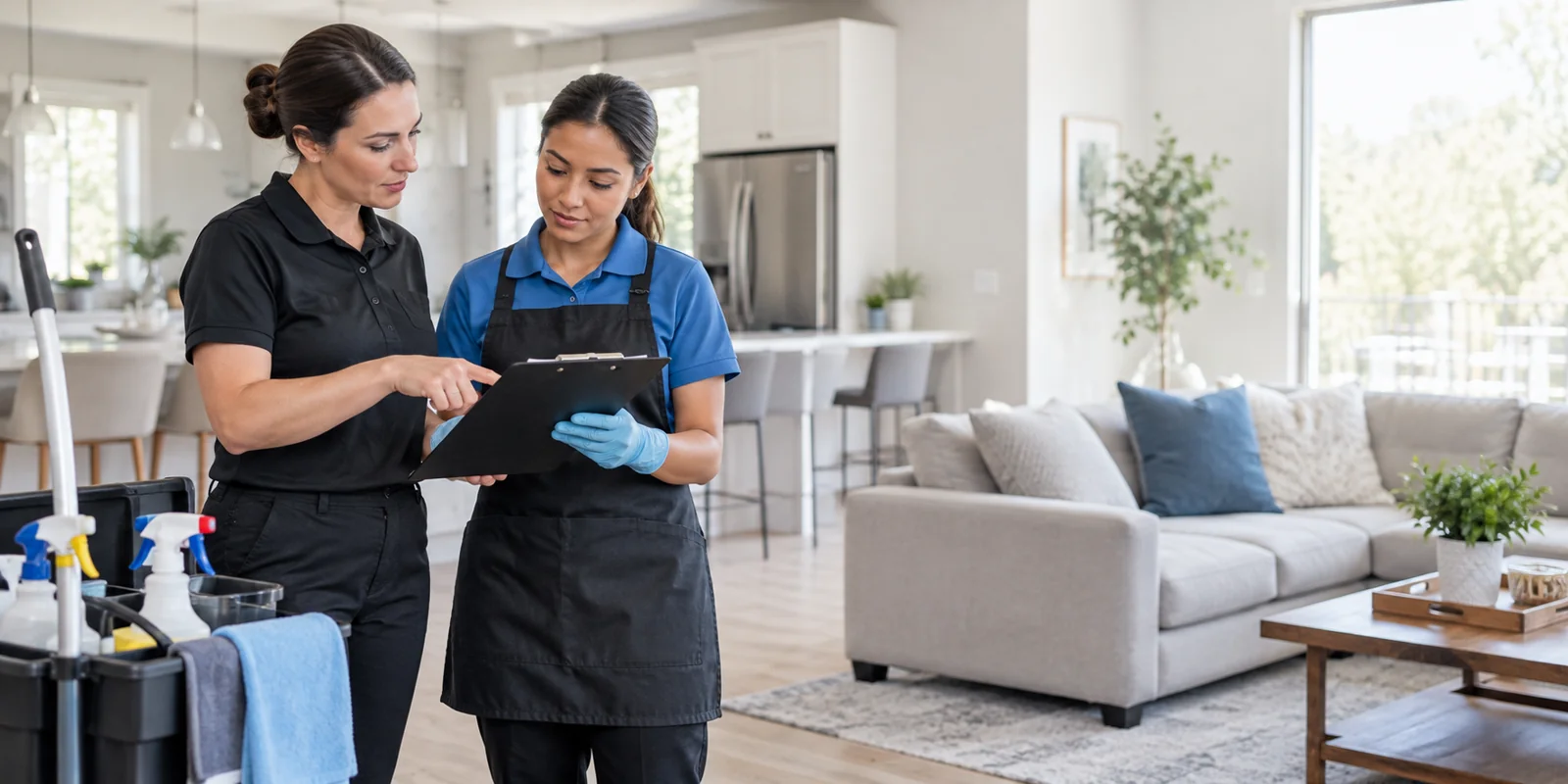
A client may expect an oven interior when a cleaner expects only the exterior. Resolve that difference before work begins. Use a walkthrough, dated photos with permission, and a short list of included extras. Do not rely on the word "deep" to explain a price.
| Confirm before work | What to record |
|---|---|
| Rooms and access | Included rooms, locked areas, occupied rooms, and entry arrangements |
| Surface restrictions | Natural stone, unfinished wood, specialty coatings, and manufacturer guidance |
| Condition | Existing damage, heavy buildup, clutter, and inaccessible areas |
| Optional extras | Oven interior, empty refrigerator interior, interior windows, and linen changes |
| Movement limits | Which light items may be moved; exclude heavy appliances unless separately planned |
| Approval | Client contact, agreed priorities, and who can approve extra work |
If the condition differs materially from the booking, pause and agree on a revised scope. Record an inaccessible area as blocked, with a reason, instead of marking it done. A checklist is most useful when it records reality, including unfinished work.
Prepare a safe, repeatable working route
Read product labels and surface-care instructions before starting. Use the specified protection, ventilate as directed, and never mix cleaning chemicals. Cleaning and disinfecting are different tasks: where disinfection is appropriate, clean first and follow the product's contact time. These basics are supported by the CDC's cleaning and disinfecting guidance.
Use separate, clearly identified cloths and tools for toilets and other areas. Do not carry a used bathroom cloth into the kitchen. Set aside used cloths in a separate container and use your organization's laundering procedure. Protect floor access and keep supplies out of the client's way.
For the route itself, finish dry dust removal before wet floor work and work toward the room's exit. Complete one zone at a time where practical. Never climb on furniture to reach high areas. Flag tasks requiring equipment or training that the assigned cleaner does not have.
Kitchen deep cleaning checklist
Separate accessible exterior cleaning from appliance-interior extras. Food storage and belongings need explicit instructions, particularly when someone still lives in the property.
| Task | Completion check | Scope note |
|---|---|---|
| Cabinet fronts and handles | No visible residue or fingerprints | Confirm finish-compatible method |
| Backsplash and accessible counters | Crumbs and visible buildup removed | Move only approved small items |
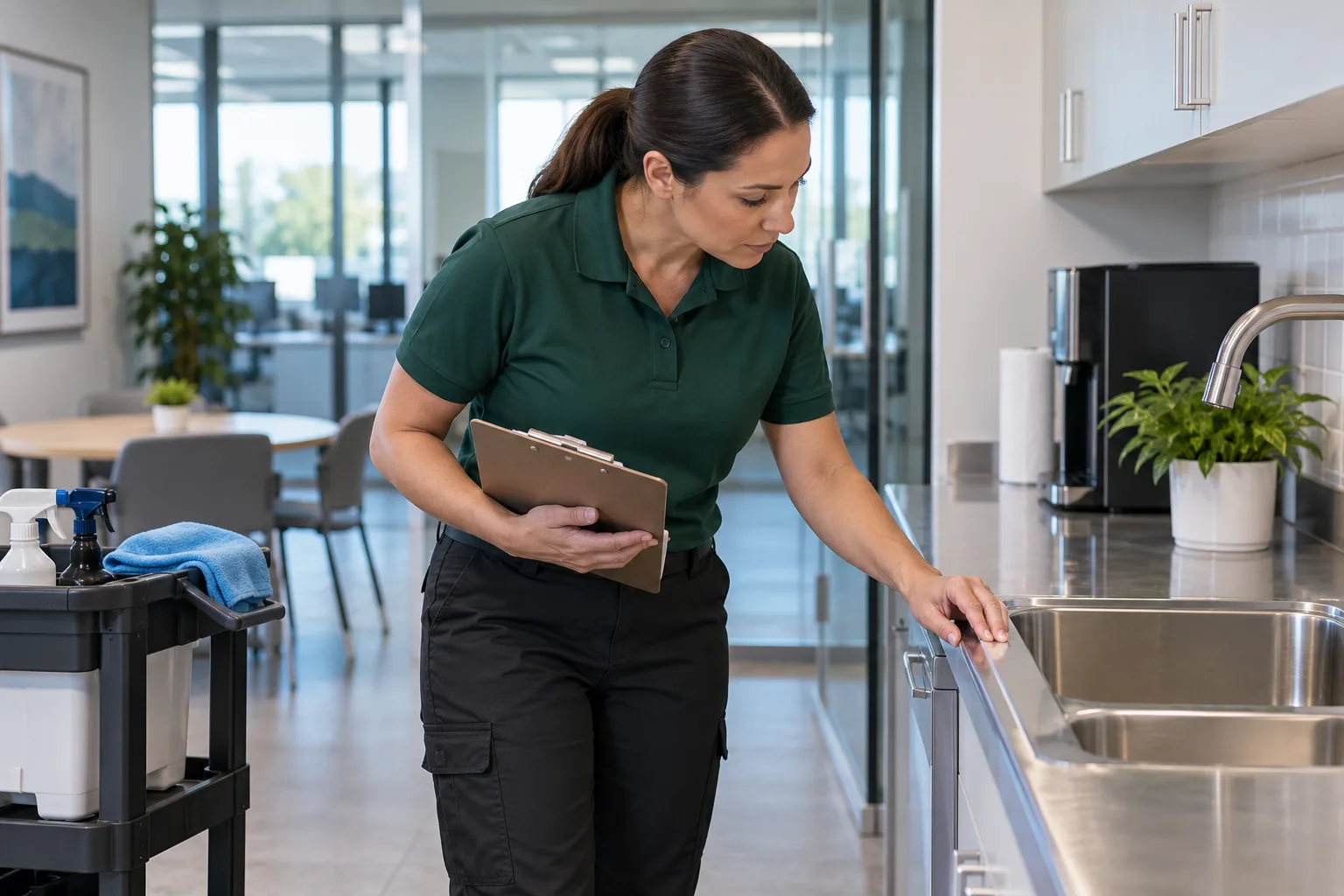
| Sink and faucet | Visible residue removed; area left orderly | Report leaks or damaged sealant |
| Appliance exteriors | Handles, fronts, and reachable edges checked | Do not disassemble equipment |
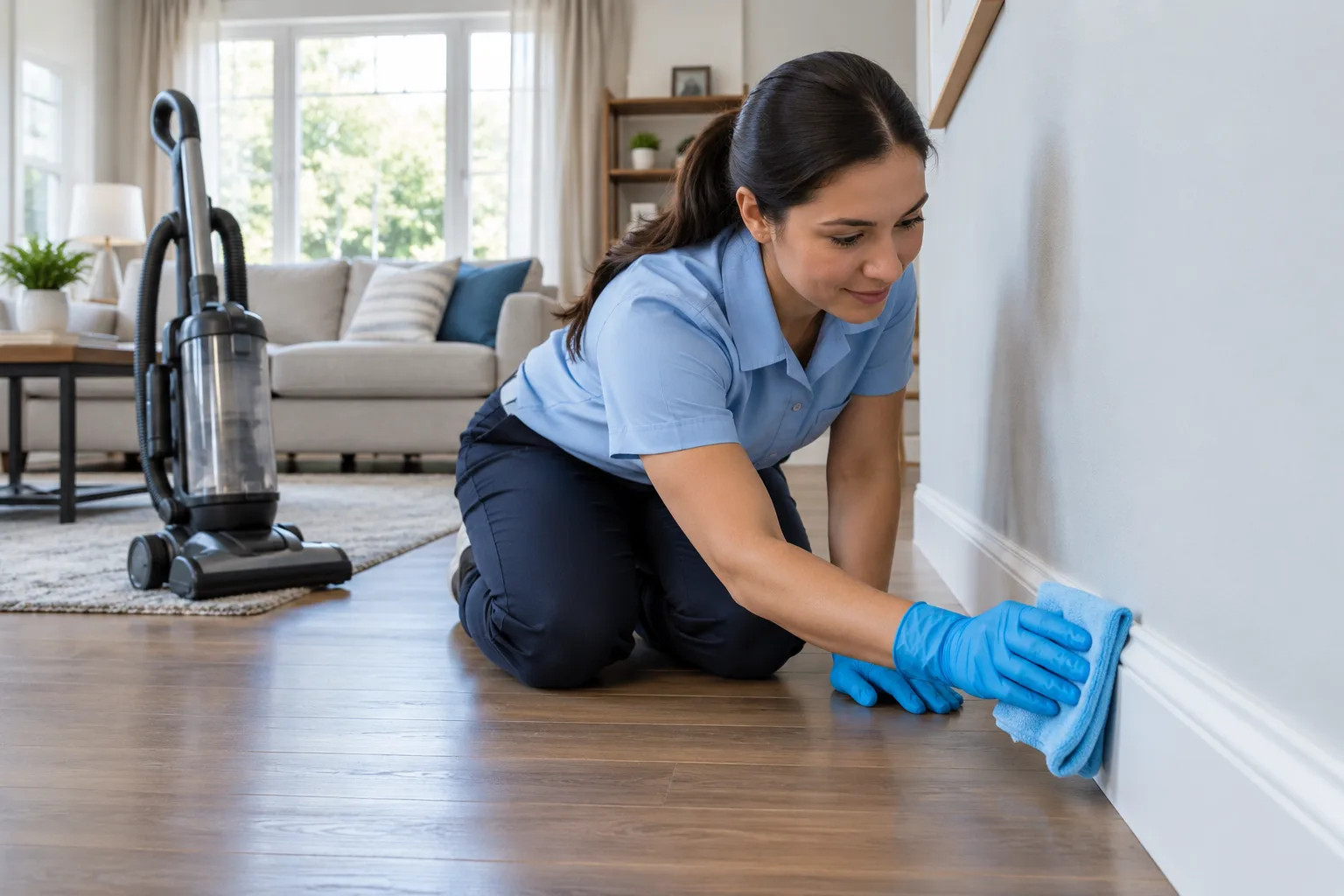
| Baseboards and floor edges | Accessible dust and debris removed | Record blocked sections |
| Waste container | Emptied and cleaned as agreed | Replace liner if included |
| Floor | Appropriate finish, no loose debris or unmanaged wet area | Follow floor-care instructions |
An oven interior or refrigerator interior should be its own approved line item. Define whether the appliance must be empty and cool, who handles food, and what happens if a component is damaged. Do not promise that every stain can be removed without harming a finish.
Bathroom deep cleaning checklist
List fixtures separately so the reviewer can identify a missed area without rejecting the entire room. Complete toilets with dedicated supplies and do not reuse those supplies on other surfaces.
- Clean accessible sink, faucet, counter, and vanity fronts using approved methods.
- Check shower or tub surfaces, reachable edges, and fittings for visible residue.
- Clean the toilet using the team's documented procedure.
- Remove visible marks from mirrors and approved glass surfaces.
- Wipe accessible door edges, handles, switches, and baseboards as appropriate.
- Empty the waste container and replenish contracted supplies.
- Finish the floor, check accessible corners, and leave the area safe for handover.
Record persistent discoloration, failed sealant, leaks, or suspected mold as exceptions. Do not label a maintenance defect a cleaning failure, and do not keep applying stronger products to chase a result outside the agreed method. Escalate conditions beyond an ordinary cleaning job.
Bedroom and living-area checklist
These rooms often contain personal belongings. Agree on where movable items will go and whether beds and linens are included. A cleaner should not need to guess whether paperwork may be rearranged or a drawer may be opened.
- Dust accessible shelves, furniture tops, ledges, and approved decorative items.
- Detail reachable baseboards, door frames, handles, and switches.
- Vacuum floor edges and beneath furniture that can be accessed safely without unauthorized lifting.
- Vacuum upholstery only when included and suitable for the fabric.
- Clean interior glass only where included, reachable, and safe.
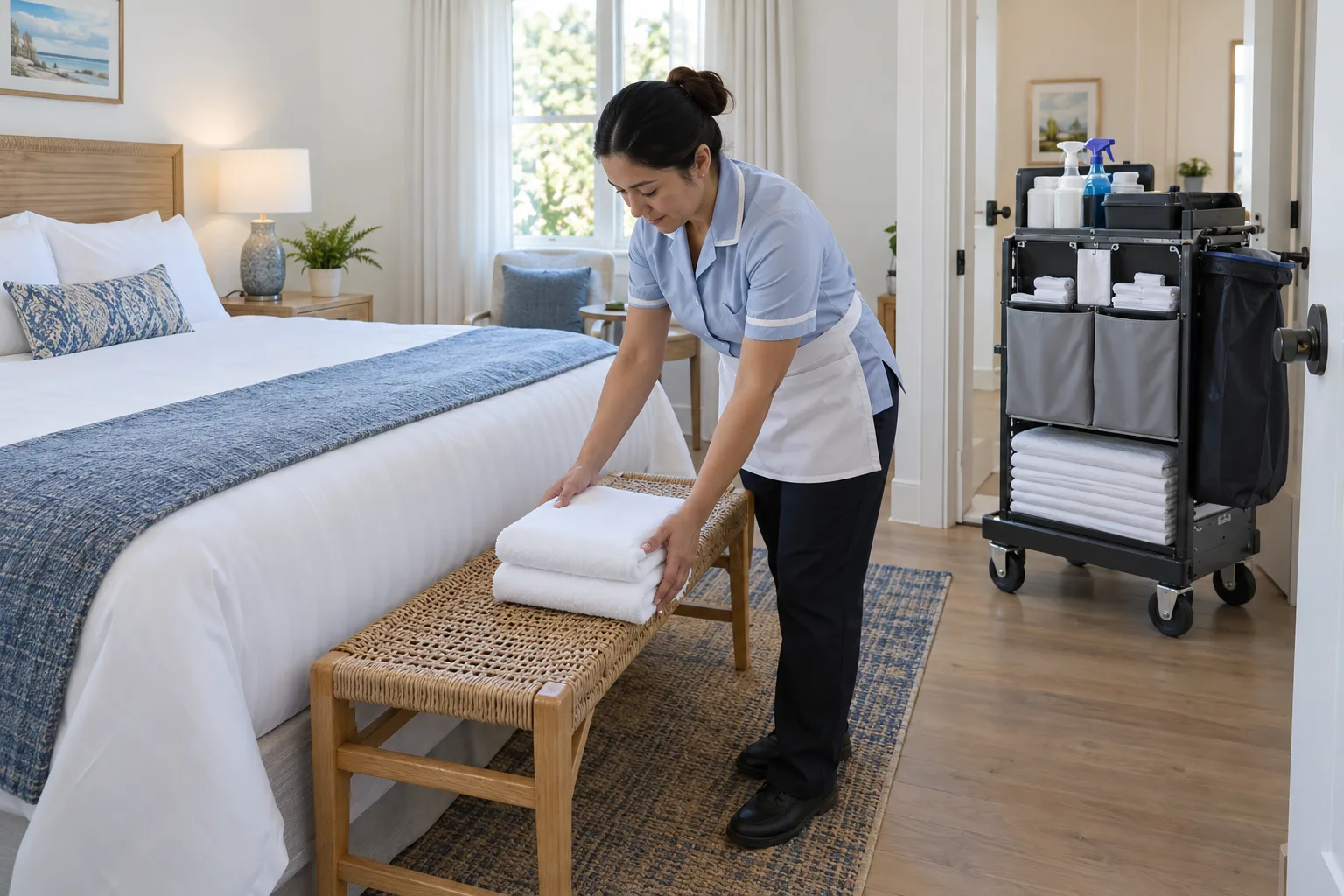
- Change approved linens or reset the bed if this is part of the service.
- Return moved items to the agreed positions and remove supplies.
Record the difference between "not included" and "not accessible." The first is a scope decision; the second may require client action. Neither should silently become a checked box.
Finish with a separate inspection
Do the final walkthrough after the cleaner considers the room complete. Review the agreed task list, not a different set of expectations introduced at handover. Check edges, visible residue, item placement, waste removal, and unresolved exceptions. A visually clean surface is not proof that a disinfection procedure was completed.
For each issue, record the room, exact location, required correction, owner, and recheck. "Kitchen still dirty" is difficult to act on. "Crumbs remain along the front edge of the lower cabinet beside the sink" tells the cleaner what to correct.
Use the cleaning inspection checklist when you need an independent acceptance record. Keep cleaner completion and reviewer acceptance as separate fields.
Example: handle an inaccessible area honestly
Suppose a client books a two-bedroom property with kitchen exteriors, two bathrooms, and accessible baseboards. During the walkthrough, a large cabinet blocks part of a bedroom wall. The example below is illustrative, not a measured customer result.
The cleaner completes reachable baseboards and marks the blocked section as "blocked: heavy cabinet; movement excluded." The supervisor checks the reachable section and preserves the exception. The client can then approve separate access arrangements or accept the original scope. No one needs to move the cabinet unsafely or pretend the whole wall was cleaned.
This is also why fixed job durations can be misleading. Estimate from the actual rooms, condition, access, team size, and approved extras. Compare planned and actual labor time on your own jobs before using a fixed allowance for future bookings.
Frequently asked questions
What is included in a deep house cleaning?
Usually, it adds detail work to a regular service, such as accessible edges, baseboards, cabinet fronts, and fixture buildup. There is no single package definition. The signed scope should state the included rooms, optional interiors, and exclusions.
What order should a team follow?
Start with the walkthrough and setup, complete agreed room tasks using the team's methods, finish floors without walking back over wet areas, and inspect before handover. The exact route depends on the layout and access restrictions.
How often should a deep clean happen?
Use observed buildup, occupancy, recurring-service coverage, and client requirements to decide. Do not automatically sell the same interval to every property. Note repeat problem areas and adjust the maintenance schedule.
Can a cleaner finish a deep clean in two hours?
That depends on scope and condition. Two hours may cover selected priorities, but it is not a reliable promise for a full property. Agree on a prioritized task list and report what remains.
From a checklist to a working procedure
The checklist says what must be finished. A cleaning SOP explains the method, tools, precautions, and quality standard. Keep those documents linked so new staff do not have to infer the technique from a short task name.
For recurring room resets, use the housekeeping checklist. For guest changeovers, keep the additional arrival checks in the Airbnb turnover guide.
Sources and editorial scope
Safety reference: CDC: When and How to Clean and Disinfect Your Home. The room lists and workflow examples are original Vid2SOP planning templates, not CDC-approved procedures or a certification standard. Product labels, site requirements, and a competent supervisor's review take precedence.
Put your process into practice
Document your approved deep-cleaning method as a visual SOP for your team.
Use a demonstration video you have permission to record, then review every generated instruction and screenshot against the actual method before issuing it to staff.
Create your SOP