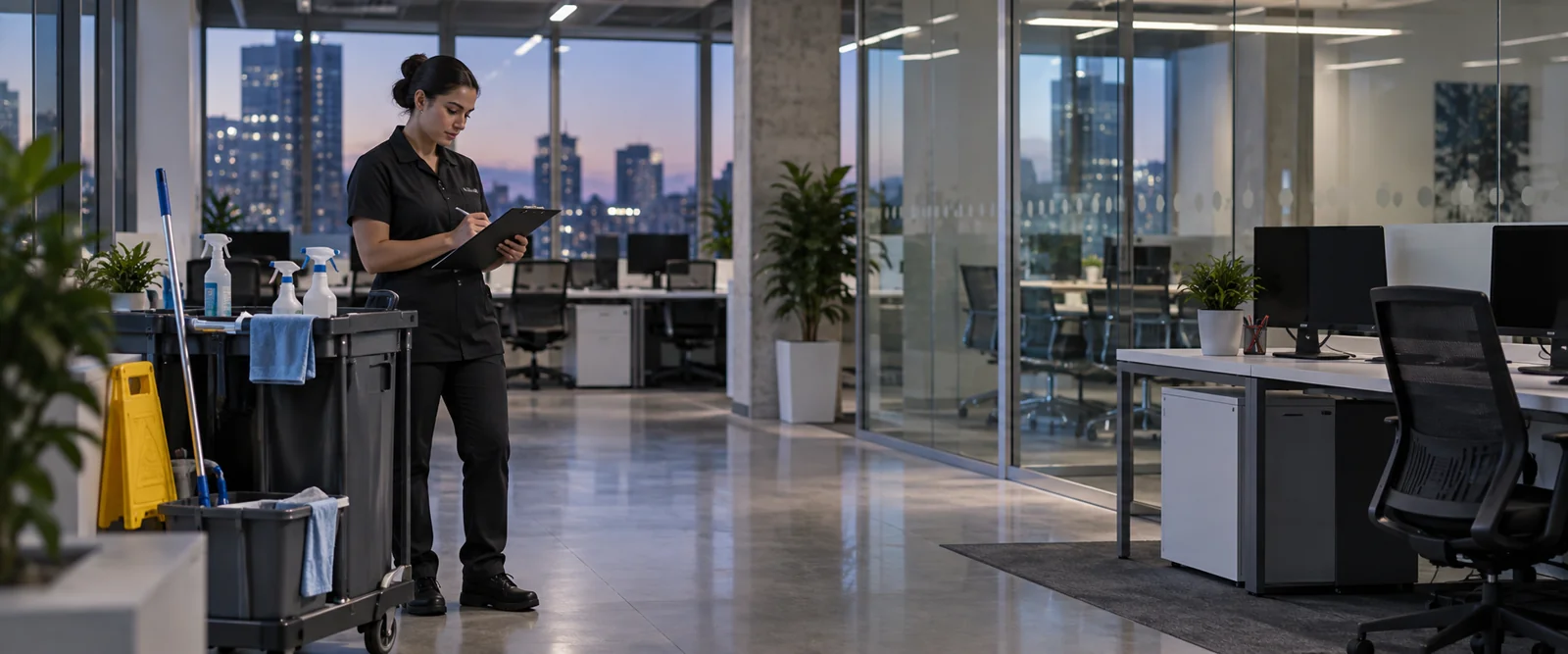
Office cleaning needs consistency. Clients expect desks, restrooms, floors, meeting rooms, kitchens, and shared areas to be cleaned on schedule without repeated reminders.
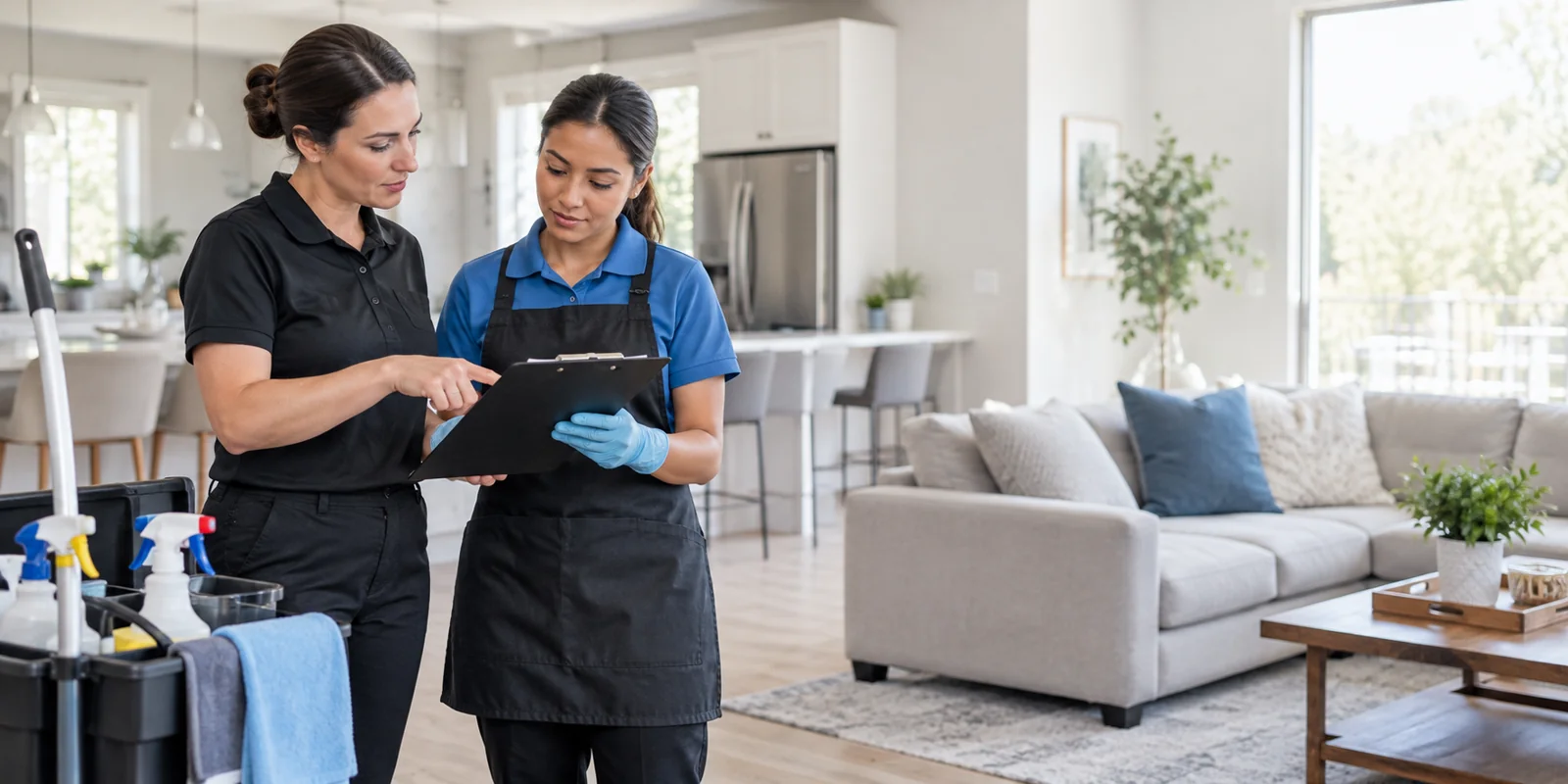
An office cleaning checklist helps cleaners follow the same process every time. It also helps supervisors inspect work faster and train new team members without explaining the same steps again and again.
This guide gives you a practical office cleaning checklist structure for professional cleaning teams.
Why Office Cleaning Checklists Matter
Commercial cleaning jobs involve repeated tasks across many rooms and surfaces. Without a checklist, cleaners can miss small but visible details: trash bins, fingerprints on glass, restroom supplies, breakroom counters, conference tables, and high-touch areas.
Use a checklist to:
- Keep daily cleaning consistent
- Train new cleaners faster
- Reduce missed tasks
- Make supervisor inspections easier
- Create a record of completed work
- Turn client expectations into a repeatable process
Daily Office Cleaning Checklist
Use daily tasks for areas that affect first impressions and hygiene.
- Empty trash bins and replace liners
- Wipe desks and shared work surfaces
- Clean reception area
- Disinfect high-touch surfaces
- Clean glass doors and visible fingerprints
- Vacuum carpets or sweep hard floors
- Mop hard floors where needed
- Clean restrooms
- Refill soap, paper towels, and toilet paper
- Clean breakroom counters and sinks
- Check meeting rooms
- Report damage, spills, or maintenance issues
Reception Area Checklist
The reception area is often the first place clients, employees, and visitors notice.
- Empty trash bins.
- Wipe reception desk surfaces.
- Clean glass doors and entrance handles.
- Straighten chairs, tables, and magazines if present.
- Vacuum rugs and entry mats.
- Mop hard floor areas.
- Remove fingerprints from visible glass.
- Check for odors or spills.
Desk and Workstation Checklist
Office desks should be cleaned carefully because employees may leave personal items, documents, or electronics.
- Do not move confidential papers unless instructed.
- Wipe open desk surfaces.
- Disinfect shared keyboards or phones only if approved.
- Clean chair arms and high-touch surfaces.
- Empty desk-side bins.
- Vacuum around and under desks where accessible.
- Report spills or damage.
Restroom Cleaning Checklist
Restrooms affect trust immediately. They should have a clear process and a final inspection.
- Empty trash.
- Refill toilet paper, soap, and paper towels.
- Clean and disinfect toilets and urinals.
- Clean sinks and faucets.
- Clean mirrors.
- Wipe partitions, handles, and dispensers.
- Remove floor debris.
- Mop floor.
- Check odor and ventilation.
- Report leaks, clogs, or broken fixtures.
Breakroom and Kitchen Checklist
Breakrooms are high-use spaces that can become messy quickly.
- Empty trash and recycling.
- Wipe tables and counters.
- Clean sink and faucet.
- Wipe microwave exterior and handle.
- Check refrigerator exterior and handle.
- Clean coffee station area.
- Refill supplies if included in service.
- Sweep or vacuum floor.
- Mop floor.
- Report spills, odors, or pest concerns.
Meeting Room Checklist
Meeting rooms should look ready for the next meeting.
- Reset chairs.
- Wipe table surfaces.
- Remove trash or leftover cups.
- Clean whiteboards only if instructed.
- Check remote controls or shared equipment.
- Vacuum or sweep floor.
- Remove fingerprints from visible glass.
Weekly Office Cleaning Checklist
Weekly cleaning keeps the office from slowly losing quality over time.
- Dust shelves and ledges
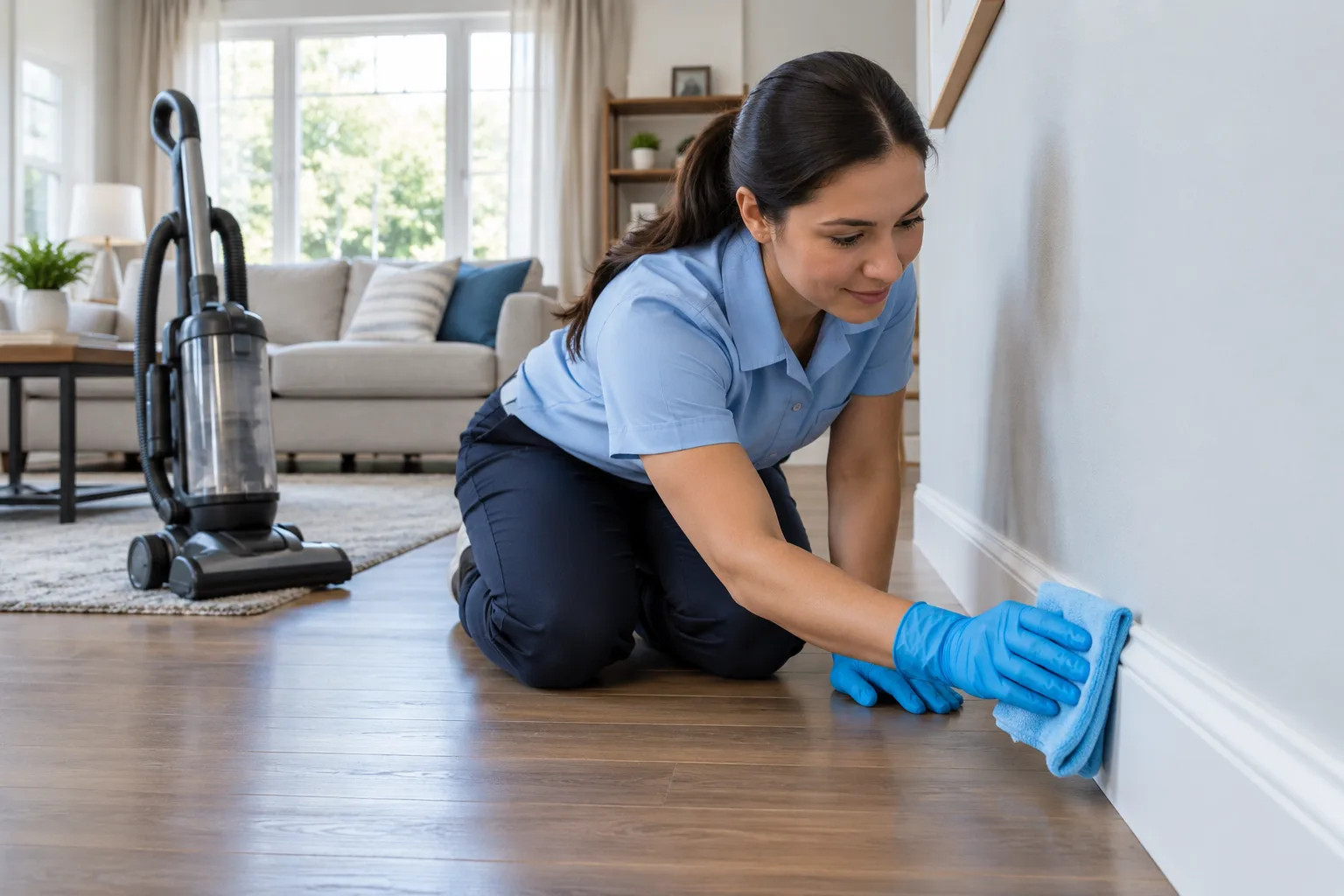
- Clean baseboards in visible areas
- Wipe chair arms and conference room furniture
- Deep clean breakroom appliances externally
- Detail glass partitions
- Vacuum edges and corners
- Spot clean walls and doors
- Check supply inventory
Monthly Office Cleaning Checklist
Monthly tasks are useful for deeper maintenance.
- Clean vents and high dust areas where accessible
- Detail entryway areas
- Deep clean restroom partitions
- Polish stainless surfaces where applicable
- Review recurring problem areas
- Update the client notes
- Review checklist accuracy with the supervisor
Supervisor Inspection Checklist
Use the cleaning inspection scorecard to record pass, rework, blocked items, and a separate release decision. For an agreed periodic detail visit, use the deep cleaning checklist rather than treating every extra task as daily work.
A supervisor does not need to repeat every cleaning task, but they should verify visible quality.
- Walk through entry area, restrooms, breakroom, and meeting rooms.
- Check bins, floors, glass, sinks, and high-touch surfaces.
- Look for missed corners or visible dust.
- Confirm supplies are restocked.
- Review any cleaner notes.
- Record client-specific issues.
- Update the checklist if the same issue appears repeatedly.
Common Office Cleaning Mistakes
Even experienced teams can miss details when the process is not documented.
Common mistakes include:
- Cleaning desks too aggressively and moving personal items.
- Forgetting high-touch surfaces.
- Skipping glass fingerprints.
- Missing restroom supply refills.
- Not checking under chairs and tables.
- Leaving wet floors without proper caution.
- Not reporting damage or leaks.
A good checklist reduces these mistakes because it turns the job into a repeatable routine.
Turn the Checklist Into a SOP
A checklist confirms what was done. A SOP explains how it should be done.
For office cleaning, a SOP can include:
- Tools and supplies
- Room-by-room cleaning order
- Product use instructions
- Safety notes
- Quality standards
- Proof of completion
- Supervisor inspection steps
If your team already has a good office cleaning routine, record a short process video. Then use Vid2SOP to turn that video into a written SOP with visual steps and a branded PDF.
Office Cleaning SOP Example
Use this simple SOP structure for recurring office cleaning:
SOP Name: Daily Office Cleaning Procedure
Purpose: Standardize daily office cleaning tasks for commercial clients.
Scope: Reception, workstations, restrooms, breakroom, meeting rooms, and common areas.
Tools: Cleaning cart, gloves, microfiber cloths, disinfectant, glass cleaner, mop, vacuum, trash liners.
Safety: Use wet floor signs where needed, do not mix chemicals, report hazards immediately.
Procedure: Start with trash removal, clean common areas, complete restrooms, clean breakroom, reset meeting rooms, vacuum or mop floors, complete final inspection.
Quality Check: Floors clean, bins empty, surfaces wiped, restrooms stocked, glass clear, no supplies left behind.
Proof: Record issues, take photos if required, notify supervisor of damage or missing supplies.
Final Thoughts
Office cleaning works best when every cleaner follows the same standard. A checklist keeps the daily job moving. A SOP trains the team and protects quality.
Start with your most common office cleaning route, document the steps, test the checklist during a real shift, and then improve it with supervisor feedback.
Put your process into practice
Turn your office cleaning process video into a professional SOP PDF with Vid2SOP.
Use it to train cleaners, standardize quality, and reduce repeated explanations.
Create your SOP